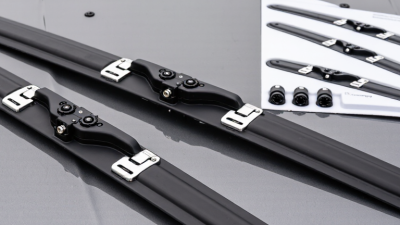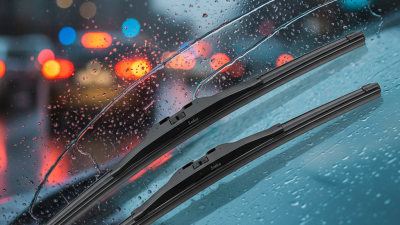
Choosing China’s top Auto Wipers manufacturers requires more than comparing factory prices. A reliable decision begins with product performance, material quality, testing evidence, and communication. Buyers should examine rubber formulations, steel tension strips, connector durability, and wiping consistency under heavy rain. A sample may look excellent on a clean windshield. Real performance appears after dust, heat, freezing temperatures, and repeated operation.
I have reviewed automotive component suppliers where impressive catalogs concealed weak quality control. Therefore, request production samples, inspection records, warranty terms, and traceable test results. Check whether the manufacturer owns its molding, rubber processing, and assembly capabilities. Ask how it controls blade pressure across different windshield curves. Also confirm compatibility with vehicle models, arm types, and regional weather conditions. Small details matter. Packaging matters too.
Li Wei, an automotive visibility systems consultant with more than fifteen years of supplier evaluation experience, says, “The best Auto Wipers manufacturer is not the cheapest one; it is the supplier that proves stable performance after repeated use.” His point deserves attention, although it should not end the investigation. Certifications can support trust, but they cannot replace independent testing. A factory may offer low prices and fast samples, yet struggle with consistent mass production. That possibility is easy to overlook. Buyers should compare communication speed, technical support, production capacity, and after-sales responsibility. No supplier is perfect. A careful selection process should reveal weaknesses early, before they become costly customer complaints.
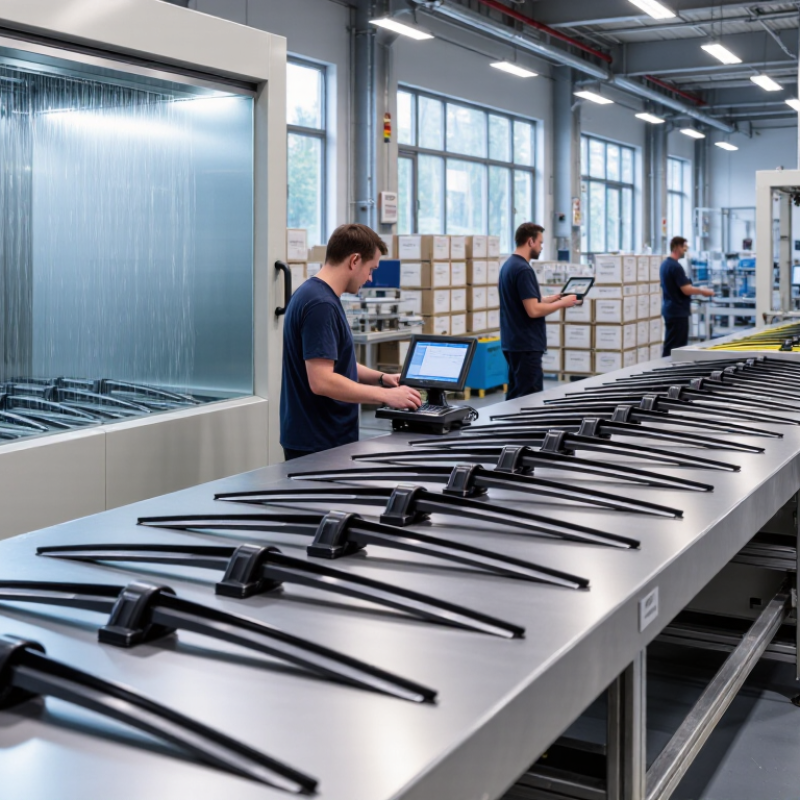
A top auto wiper manufacturer in China is defined by more than export volume or a polished catalog. It should understand blade pressure, rubber behavior, arm compatibility, and changing weather conditions. Engineers need to test wiping clarity in low temperatures, heavy rain, dust, and repeated dry cycles. Small details matter. A blade leaving a narrow water film can reduce visibility within seconds. Experienced manufacturers record these results and adjust molds, coatings, and tension points.
Reliable production begins with controlled materials. Rubber hardness should remain consistent between batches, while steel or polymer frames need accurate dimensions. Automated assembly helps, but trained inspectors still matter. They can spot uneven edges, loose connectors, and packaging damage. A serious supplier should provide traceable inspection records, sample reports, and clear tolerances. Independent testing and recognized quality systems add confidence, but paperwork cannot replace physical checks.
Communication also separates a capable manufacturer from a merely available one. The supplier should answer fitment questions clearly and discuss samples before accepting large orders. It should explain replacement intervals without promising unrealistic service life. Factory visits, pilot orders, and field feedback reveal more than online claims. No manufacturer is perfect; even a strong factory may struggle with a new connector or unusual climate. That weakness should be admitted and corrected. Buyers should review failure rates, response speed, and corrective actions over time. Price still matters, but unstable quality can cost more through returns, complaints, and lost trust.
| No. | Evaluation Dimension | Suggested Weight | Reliable Evidence to Request | Practical Benchmark | Why It Matters |
|---|---|---|---|---|---|
| 1 | Automotive Quality Management | 20% | Current IATF 16949 certificate, ISO 9001 certificate, scope of certification, and latest surveillance-audit status. | Certificate scope should cover the relevant automotive product or manufacturing activity and be issued by an accredited certification body. | A controlled quality system reduces process variation and improves traceability. |
| 2 | Product and Material Engineering | 15% | Material specifications for rubber or synthetic wiping elements, backing steel, adapters, coatings, rivets, and plastic components. | Each material should have defined grades, incoming inspection requirements, approved suppliers, and change-control records. | Material stability influences wiping clarity, noise, corrosion resistance, and service life. |
| 3 | Testing and Validation Capability | 15% | Internal test procedures, equipment list, test reports, calibration records, and validation results for wiping, noise, wear, corrosion, temperature, and fitment. | Test methods should be linked to customer specifications, applicable technical requirements, or recognized laboratory procedures. | Testing verifies performance instead of relying only on visual inspection or supplier claims. |
| 4 | Manufacturing Process Control | 15% | Process flow chart, control plan, work instructions, inspection records, equipment-maintenance plan, and nonconformity procedures. | Critical dimensions and assembly steps should have documented inspection frequency, acceptance limits, and reaction plans. | Consistent assembly affects connector security, blade pressure, balance, and vehicle fit. |
| 5 | Fitment and Application Coverage | 10% | Vehicle application catalog, arm-type compatibility chart, connector drawings, size range, left-hand-drive and right-hand-drive coverage, and sample-fit records. | Every application should be verified for length, connector geometry, spoiler orientation, curvature, and arm pressure. | Correct fitment prevents installation problems, uneven contact, and customer returns. |
| 6 | Supply Chain and Traceability | 10% | Batch coding, raw-material records, production-date identification, supplier approval procedure, and product-recall or containment process. | The manufacturer should be able to trace finished goods to production batches and key incoming materials. | Traceability enables faster investigation and controlled corrective action. |
| 7 | Production Capacity and Delivery | 10% | Monthly capacity by product type, recent on-time-delivery records, production lead time, peak-season plan, and backup equipment or tooling. | Capacity figures should be supported by production records and should distinguish installed capacity from available capacity. | Adequate capacity supports stable supply and reduces shipment delays. |
| 8 | Customization and Tooling Control | 5% | Engineering-change procedure, tooling ownership terms, mold-maintenance records, prototype process, packaging customization, and sample-approval workflow. | Changes should require documented approval, revision control, and updated inspection or validation records. | Controlled customization reduces the risk of unauthorized design or packaging changes. |
| 9 | Compliance and Export Documentation | 5% | Declarations of conformity where applicable, restricted-substance statements, safety data, packaging documents, country-of-origin documents, and export experience. | Documents should match the exact product, material version, destination market, and shipment configuration. | Accurate documentation supports customs clearance and market-entry requirements. |
| 10 | After-Sales and Corrective Action | 5% | Written warranty terms, complaint-response procedure, failure-analysis capability, corrective-action reports, and replacement policy. | The supplier should provide documented root-cause analysis and corrective action for quality complaints. | Responsive support protects customer satisfaction and reduces the cost of field failures. |
Conventional frame wipers use a metal structure and several pressure points. They suit older vehicles with curved but relatively regular windshields. Their replaceable rubber inserts can reduce maintenance costs. However, exposed joints may collect ice, dust, and road salt. They may also lift slightly at highway speed.
A 2024 MarketsandMarkets assessment expects the automotive wiper system market to grow at more than 5% annually through 2029. This reflects stronger demand for safer, more efficient wiping systems.
Flat beam wipers use a flexible spine and distribute pressure across the blade. They perform well on modern curved glass, especially during heavy rain. Their low profile creates less wind noise. They are also easier to clear after snowfall.
Hybrid wipers combine a framed structure with an aerodynamic outer cover. They fit drivers who need stronger contact but prefer better airflow performance. These are useful for mixed weather, including rain, dust, and light snow.
Check the vehicle’s arm connector, blade length, and windshield curvature before choosing. Federal Motor Vehicle Safety Standard 104 emphasizes adequate wiped area and reliable washer operation. Fit matters more than appearance.
A cheaper blade can work well on a clean windshield, but poor rubber quality leaves fine arcs across the driver’s view. I have found that many replacement decisions focus too heavily on price. That is not always wise.
Testing performance after installation remains essential.
Evaluating Chinese wiper manufacturers requires more than comparing unit prices. OICA reported 93.5 million motor vehicles produced worldwide in 2023. This scale supports strong manufacturing capability, but volume does not prove consistency. Request factory audit records, production capacity, export history, and quality certificates. IATF 16949 certification is valuable because it supports controlled automotive processes. However, certification alone is not enough.
Ask for test evidence covering wiping endurance, rubber hardness, UV exposure, ozone resistance, corrosion, and low-temperature flexibility. Check whether reports identify the exact material, batch, test method, and laboratory. FMVSS 104 defines performance requirements for windshield wiping and washing systems in the United States. UNECE requirements also guide international vehicle equipment compliance. A serious supplier should explain how its products meet the target market’s rules. In my experience, the first sample may look excellent. Production batches can still vary. That is where many evaluations become too optimistic.
Tips
Order samples from separate production dates. Measure contact pressure and streak width after repeated cycles. Inspect the adapter fit by hand, not only through photographs. Request corrective-action records for failed tests. Confirm rubber and steel suppliers, barcode traceability, and packaging protection. A small pilot order reveals more than a polished presentation. Also review customer complaint data when available. Perfect reports can hide weak daily control. Independent laboratory testing costs more, but it reduces expensive returns and protects driving visibility.
When comparing Chinese auto wiper manufacturers, price is only the opening figure. Request a detailed quotation covering rubber type, frame material, adapter designs, packaging, tooling, and shipping terms. A very low offer may exclude testing or replacement support. That matters. In supplier assessments, I compare the cost per usable unit, not only the factory price. Check sample consistency after repeated wiping, heat exposure, and water testing. Ask for batch records and clear acceptance standards.
Verify the certificate number, issuing body, scope, and expiration date. ISO 9001 supports quality management, while IATF 16949 may indicate stronger automotive production controls. Request test reports for relevant markets and confirm that product claims match local requirements. Audit photos are helpful, but an on-site or video audit is more reliable. Small details matter, such as calibrated gauges and labeled inspection areas.
Ask for monthly output, current utilization, mold availability, labor shifts, and backup production lines. A factory claiming huge capacity may struggle with a sudden custom order. Request lead-time records from similar projects. Also examine defect rates, corrective-action reports, and spare-part availability. My own comparison checklist is not perfect; it can overvalue paperwork and undervalue communication speed. Recheck assumptions through samples, a pilot order, and written production milestones.
Selecting a China auto wiper supplier requires more than comparing unit prices. OICA reported 93.5 million motor vehicles produced worldwide in 2023, creating strong demand for stable aftermarket and original-equipment supply. Fortune Business Insights valued the global automotive windshield wiper market at about USD 4.5 billion in 2023. These figures make supplier reliability important, not optional.
Start by defining your application. Record vehicle models, arm types, blade lengths, climate conditions, packaging needs, and target volume. Ask each factory for material specifications, salt-spray results, wiping-cycle data, and low-temperature testing. A practical sample check should inspect rubber edges, adapters, spring pressure, connector fit, and noise on wet glass. Do not trust photographs alone. Test production samples.
Then audit the supplier’s quality system and production evidence. Check traceability, incoming-material controls, final inspection records, and corrective-action procedures. ISO 9001 helps, while IATF 16949 experience can indicate stronger automotive process discipline. Request recent third-party test reports, but verify the laboratory and test conditions. Confirm production capacity through machine lists, staffing, lead times, and previous shipment records. The cheapest quote may hide inconsistent rubber batches or weak packaging. That mistake becomes expensive.
Use a written supplier scorecard covering quality, communication, delivery, documentation, and total cost. A small trial order can expose problems earlier. However, one successful batch proves little. Seasonal performance, engineering response, and replacement handling still need observation. No checklist is perfect; I would revise it after every failed sample or delayed shipment.
Recommended evaluation weights for selecting an automotive wiper supplier
Use this weighted checklist to compare suppliers consistently. Product quality and testing should receive the highest priority, followed by fitment, delivery reliability, compliance documentation, customization capability, and commercial terms. Ask each supplier for verifiable test reports, production samples, quality certificates, lead-time records, and warranty conditions before making a final decision.