Windshield Wipers are small components with a large safety responsibility. During heavy rain, a damaged blade can leave blurred arcs across the driver’s view within seconds. Global buyers therefore assess more than price. They examine rubber formulation, arm compatibility, factory consistency, testing records, packaging, and replacement support.
Market estimates show continuing demand. Fortune Business Insights valued the global automotive wiper systems market at approximately USD 7.96 billion in 2023. It projects the market could reach USD 12.64 billion by 2032. Grand View Research reports different figures because its scope and product definitions vary. This difference deserves attention. Supplier comparisons are not always perfectly comparable.
Visibility remains the central issue. As automotive safety researcher Dr. David Strayer has stated, “Clear visual information is essential for safe driving.” His broader human-factors research supports a practical point: wiper performance directly affects the information drivers receive. The quotation is not a blade specification, but it explains the buyer’s responsibility.
China has become a major manufacturing base for Windshield Wipers, serving passenger vehicles, commercial fleets, retailers, and aftermarket distributors. The leading suppliers differ considerably in engineering depth and export experience. Some offer private-label programs and automated quality inspection. Others compete mainly through flexible minimum orders.
This guide introduces ten Chinese suppliers for global buyers. It considers product range, certifications, production capability, customization, lead times, and communication reliability. Factory claims still require verification. A polished catalog is not enough. Buyers should request samples, test wiping noise, inspect packaging, and confirm traceability before placing large orders. The ranking may not fit every purchasing strategy, but it offers a useful starting point.

China’s windshield wiper market is expected to expand steadily from 2024 to 2030. Rising vehicle ownership, replacement demand, and electric vehicle production are supporting this growth. In many regions, drivers replace wipers before the rainy season, creating repeat purchasing cycles. Weather matters more than many buyers expect.
Global demand is also shifting toward quieter, longer-lasting products. Buyers increasingly request natural rubber or advanced synthetic compounds, corrosion-resistant frames, and precise adapter systems. Factory experience is important here. A supplier should provide material specifications, wiping tests, salt-spray results, and consistent batch records. Clear documentation reduces costly surprises during import and distribution.
Price still influences purchasing decisions, but it cannot stand alone. Low-cost blades may leave streaks after several weeks, especially in dusty or cold conditions. That damages customer trust. Forecasts may also be too optimistic; shipping costs, currency changes, and uneven vehicle demand can alter purchasing plans quickly. Global buyers should compare production capacity, inspection procedures, packaging strength, and delivery history before selecting suppliers. A sample may perform well, yet mass production can reveal weaknesses. Regular inspections remain necessary.
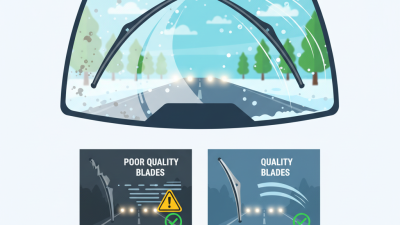
Rank suppliers by six buyer-critical metrics, not factory size alone. Start with wiping performance, rubber durability, and arm-to-blade fitment across real vehicle samples. ISO 9001 certification helps, but it does not replace test records. Ask for salt-spray results, temperature-cycle data, wiping-cycle evidence, and batch traceability. A clean glass sweep matters more than a polished catalogue.
Capacity and delivery reliability deserve separate scores. Compare monthly output, mold ownership, minimum order quantity, lead-time history, and backup production lines.
The China Association of Automobile Manufacturers reported that the average U.S. vehicle age reached 12.6 years in 2024, supporting continuing replacement demand. Therefore, evaluate long-term aftermarket fitment, not only original-equipment projects.
The China Association of Automobile Manufacturers reported 30.16 million vehicle sales in 2023, showing strong manufacturing depth, but scale can hide allocation problems. Check production photos, inspection reports, and recent shipment records. Paper promises are easy.
Commercial ranking should include total landed cost, packaging damage, warranty response, and documentation quality. S&P Global Mobility reported that the average U.S. vehicle age reached 12.6 years in 2024, supporting continuing replacement demand. Therefore, evaluate long-term aftermarket fitment, not only original-equipment projects.
Compliance evidence should cover material declarations and applicable vehicle-glazing or component requirements. Six metrics need weighted scores. Yet weighting is imperfect.
A low-price supplier may win the spreadsheet and lose the rainy-season test. Run a small pilot order, inspect every carton, and record return rates before assigning a final rank.
China’s windshield wiper supplier base is broad, but capability varies sharply. The strongest candidates combine OEM reach, stable capacity, and complete product coverage.
The China Association of Automobile Manufacturers reported 31.28 million vehicles produced in 2024. Vehicle exports reached 5.86 million units. This scale supports large wiper programs, yet production volume alone proves little. Supplier reviews should examine injection molding, rubber extrusion, stamping, coating, and final assembly. Line-side traceability matters. So does backup capacity.
OEM experience remains a practical filter. Suppliers serving vehicle manufacturers usually understand PPAP, APQP, IATF 16949, and strict change-control procedures. They should provide test records for wiping performance, corrosion resistance, noise, and low-temperature durability. ISO 9001 certification helps, but factory evidence is stronger. Ask for recent audit results.
Product coverage can reduce sourcing complexity. Look for conventional blades, flat blades, hybrid designs, rear wipers, refill strips, motors, adapters, and winter variants. According to OICA, global vehicle production reached about 93.5 million units in 2023. Replacement demand is therefore significant, especially across mixed vehicle ages and climates.
However, supplier rankings can mislead. Claimed monthly capacity may include subcontracted output. I would verify machine lists, shift patterns, defect rates, and shipment records. Small details reveal maturity. A clean sample is not enough. Reliable suppliers show repeatable results across seasons, models, and production batches.
Product coverage by vehicle segment: typical replacement windshield wiper blade length ranges
The ranges reflect commonly catalogued replacement blade sizes in the global OEM and aftermarket market. Passenger-car front blades generally cover 14–28 inches, rear blades 10–18 inches, light-commercial blades 18–32 inches, and heavy-commercial or bus blades 24–40 inches. The chart describes product coverage only and does not rank individual companies or brands.
For global buyers, windshield wiper quality starts with measurable standards, not attractive samples.
SAE J903 helps evaluate wiping performance, coverage, pressure, and durability under defined conditions. Buyers should request test records showing stable contact across the glass. A clean sweep matters most near the driver’s viewing zone.
ISO 9001 indicates a controlled quality management system. It covers documented procedures, corrective actions, supplier control, and inspection records. During factory visits, check whether batch numbers follow rubber strips, springs, adapters, and packaging. Small details reveal process discipline.
IATF 16949 goes further for automotive production. It emphasizes risk analysis, process capability, traceability, and customer-specific requirements. PPAP documents, control plans, and failure records can show whether a supplier manages production consistently.
A sample may pass a laboratory test yet chatter on dusty glass. Cold storage can harden the wiping edge, while excessive heat may weaken the backing material. Ask for repeated-cycle data, temperature testing, and installation checks across different arm designs. Some suppliers present complete certificates but explain test limits poorly. That is a warning, not proof of failure. I have found that honest factories can identify their weak points faster than polished presentations. Buyers should compare actual test evidence with production samples and field feedback. Compliance is useful, but real visibility remains the final measure.
When comparing China’s top 10 windshield wiper suppliers, global buyers should examine more than unit price. MOQ often ranges from 100 to 500 sets, depending on blade type, packaging, and customization. A supplier accepting 100 sets may suit market testing, while larger factories may require 1,000 sets for private packaging. Confirm whether the MOQ applies per model or per shipment.
Lead time commonly falls between 15 and 35 days after artwork and deposit approval. Samples may take three to seven days, but customized adapters can delay production. Ask for a written schedule with inspection points. Warranty terms usually cover 12 to 24 months, yet coverage may exclude incorrect installation or prolonged outdoor storage. Request test records for rubber durability, metal corrosion, connector fit, and wiping performance in cold conditions.
Export performance deserves careful checking. Review shipping records, destination markets, packaging photos, and document accuracy. Experienced suppliers should provide commercial invoices, packing lists, certificates, and stable carton markings. I would also compare defect rates from recent orders, not only factory claims. A polished audit report can still hide weak follow-up service. One practical test is ordering mixed samples and measuring edge contact after repeated wiping cycles. It costs more time. It reveals more.
Anonymous supplier-profile comparison for international sourcing of replacement windshield wiper blades and related components
| Rank | Supplier Profile | Main Production Area | Primary Product Focus | Typical MOQ (pieces/SKU) |
Sample Lead Time | Bulk Lead Time | Standard Warranty | Export Order Share | Typical On-Time Shipment | Common Compliance Documents | Best Fit for Global Buyers |
|---|---|---|---|---|---|---|---|---|---|---|---|
| 1 | Tier-A Integrated Manufacturer | Eastern China | Flat, hybrid, conventional, rear, and truck wiper blades | 500–1,000 | 7–12 days | 25–40 days | 12–24 months | 70%–85% | 95%–98% | ISO 9001; material test reports; packing list; certificate of origin; applicable vehicle-fitment documents | Large distributors, private-label programs, and multi-country aftermarket supply |
| 2 | High-Volume Private-Label Factory | Southern China | Aero flat blades, refill systems, and customized packaging | 1,000–3,000 | 8–14 days | 30–45 days | 12 months | 65%–80% | 94%–97% | ISO 9001; batch inspection records; product specification sheet; carton and pallet data | Retail chains and importers requiring branded or private-label packaging |
| 3 | Automotive Rubber Specialist | Central-Eastern China | Rubber refills, coated steel strips, and replacement inserts | 2,000–5,000 | 10–15 days | 25–35 days | 12 months | 55%–75% | 93%–96% | ISO 9001; rubber compound specifications; hardness and tensile test reports; inspection records | Wiper assemblers, component distributors, and refill-focused programs |
| 4 | OEM-Style Fitment Supplier | Eastern China | Vehicle-specific flat and hybrid blades for passenger cars | 500–1,500 | 7–14 days | 30–50 days | 12–18 months | 60%–75% | 93%–97% | ISO 9001; fitment application list; dimensional inspection reports; origin documentation | Automotive wholesalers and buyers needing broad vehicle coverage |
| 5 | Cost-Competitive Export Factory | Southern China | Conventional metal-frame blades and economy flat blades | 1,000–3,000 | 7–12 days | 25–40 days | 6–12 months | 60%–80% | 92%–96% | Basic quality inspection report; packing specification; commercial invoice; certificate of origin when requested | Price-sensitive importers, workshops, and emerging-market distributors |
| 6 | Small-Batch Customization Supplier | Eastern China | Custom lengths, connectors, packaging, and mixed-SKU programs | 300–800 | 10–18 days | 30–45 days | 12 months | 45%–65% | 90%–95% | ISO 9001 or equivalent factory quality system; artwork approval; pre-shipment inspection report | Online sellers, regional distributors, and test-market orders |
| 7 | Commercial Vehicle Wiper Producer | Northern China | Truck, bus, coach, and long-length windshield wiper blades | 500–1,500 | 10–16 days | 30–50 days | 12–18 months | 50%–70% | 91%–95% | ISO 9001; length and load test data; material certificates; packaging and shipment records | Fleet suppliers, commercial-vehicle distributors, and public-transport maintenance buyers |
| 8 | Premium Silicone-Rubber Specialist | Southern China | Silicone-coated blades, premium refills, and severe-weather products | 1,000–2,000 | 10–15 days | 30–45 days | 18–24 months | 55%–75% | 93%–97% | ISO 9001; silicone material data; aging and temperature-resistance test reports; batch traceability | Premium aftermarket brands, cold-climate distributors, and higher-margin channels |
| 9 | Multi-Category Automotive Supplier | Eastern China | Wiper blades, washer accessories, adapters, and related exterior parts | 1,000–3,000 | 8–14 days | 30–45 days | 12 months | 50%–70% | 90%–95% | ISO 9001; product catalog; incoming-material inspection; commercial export documentation | Buyers consolidating several automotive maintenance categories in one order |
| 10 | Flexible OEM/ODM Development Factory | Central China | New connector designs, regional fitment kits, and engineered wiper assemblies | 500–1,500 | 14–21 days | 35–55 days | 12–18 months | 45%–65% | 89%–94% | ISO 9001; engineering drawings; prototype approval records; product test reports; origin documentation | Importers developing differentiated products or market-specific applications |