Top Multifunctional Wiper Blade Features You Should Know?
In today’s world, visibility is crucial while driving. A clear view keeps you safe on the road. This is where the multifunctional wiper blade comes into play. It goes beyond traditional wipers, offering features that enhance performance.
Multifunctional wiper blades are designed for various weather conditions. They provide improved water dispersion and minimize streaks. Some models also include features like built-in washers or special coatings to repel dirt. These enhancements can make driving in rain or snow much easier.
However, not all multifunctional wiper blades are created equal. Some may not fit your vehicle perfectly. Others may wear out faster than expected. It’s essential to consider quality and compatibility. Investing in the right multifunctional wiper blade can significantly improve your driving experience. Think about your needs before making a choice.
Key Characteristics of Multifunctional Wiper Blades
When selecting wiper blades, it is essential to know their key characteristics.
Multifunctional wiper blades are designed to provide superior performance and versatility.
They often feature various rubber compounds that enhance their durability. These materials resist wear and tear from harsh weather.
Another notable characteristic is their aerodynamic design.
This reduces wind lift and ensures a smooth wipe across the windshield.
Some blades even incorporate heated elements to prevent ice build-up. Such features can be crucial during winter months.
Additionally, the adaptability of multifunctional wiper blades stands out. They can fit different vehicle models and sizes.
This flexibility often leads to better visibility in inclement weather.
However, not every wiper blade works seamlessly with all vehicles. Compatibility issues can arise, leading to subpar performance.
Reflecting on these aspects helps consumers make informed choices.
Materials Used in Advanced Wiper Blade Technology
In recent years, the materials used in wiper blade technology have advanced significantly. Traditional rubber wiper blades are being replaced by more durable and efficient materials. For instance, silicone blades are becoming popular due to their resistance to UV rays and extreme temperatures. Industry reports indicate that silicone can outperform rubber by nearly 50% in longevity. This change not only ensures clear visibility in various weather conditions but also reduces the frequency of replacement.
Another innovative material is graphite-infused rubber. This composite enhances glide and reduces friction during operation. According to a study by the Automotive Wiper Blade Association, blades made with this technology can improve wiping performance by 30%. However, there is a common misconception that higher durability always means better performance. Some users report that, despite longer lifespan, these blades can sometimes leave streaks.
Lastly, many new wiper blades incorporate advanced composite materials to resist wear. These materials are lightweight yet robust, contributing to fuel efficiency. Yet, the environmental impact of such materials warrants reflection. The production processes and disposal methods can lead to ecological concerns. Balancing durability, performance, and sustainability remains a critical challenge in the wiper blade industry.
Comparative Analysis: Traditional vs. Multifunctional Wiper Blades
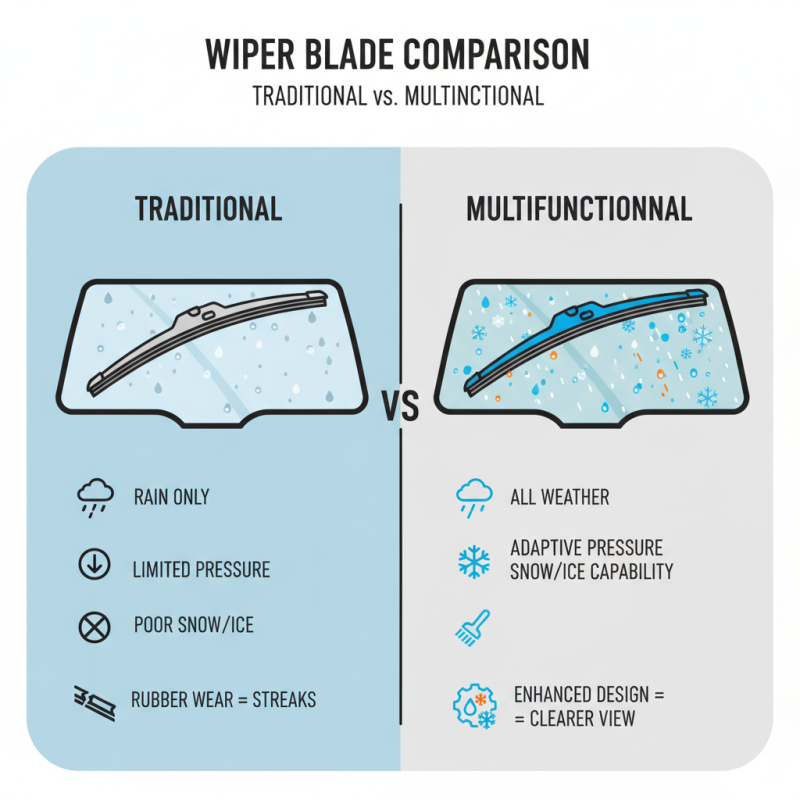
When comparing traditional and multifunctional wiper blades, key differences emerge. Traditional wipers are designed primarily for rain. Their functionality is limited to movement and pressure on the windshield. They often struggle with snow or ice. Only basic rubber can wear out, causing streaks.
In contrast, multifunctional wiper blades offer enhanced features. These blades can handle various weather conditions, including sleet and heavy snow. Some designs include built-in heaters to prevent ice buildup. This adds a layer of convenience. However, these features may come at a higher cost. Installation can also be more complex, leading to potential frustration.
While multifunctional wipers provide more utility, maintenance becomes crucial. These wipers might require frequent checks. Users need to be aware of wear and tear. Ignoring this can diminish their effectiveness. Though they promise a better experience, it’s not perfect. Reflecting on each option is essential for informed choices.
The Impact of Weather Conditions on Wiper Blade Performance
Weather impacts wiper blade performance significantly. Rain, snow, and ice change how blades grip your windshield. In heavy rain, traditional blades may struggle. They can smear water instead of clearing it. It's crucial to choose blades designed for specific weather conditions.
Tip: Regularly check your wiper blades. Look for cracks or stiffness. These signs indicate it's time for a replacement. Using worn-out blades can be dangerous.
Cold temperatures can freeze wiper blades to the windshield. This can tear the rubber and damage the metal. In winter, consider using blades designed for icy conditions. They often have special features to prevent ice build-up.
Tip: Keep your windshield clean. Dirt and debris can affect performance. A clean surface helps the blades make better contact. Ensure your washer fluid is filled too. Not having fluid can impede visibility when you need it most.
Maintenance Tips for Prolonging the Life of Wiper Blades
Maintaining wiper blades is crucial for safety and visibility. Studies show that worn-out blades can reduce visibility by up to 30%. Regular maintenance can avoid this. Check your wiper blades at least once a month. Look for signs of wear like cracks and splits. These issues can lead to streaks, which are dangerous.
Cleaning the blades extends their life. Use a soft cloth with soapy water to gently wipe the rubber. This can remove dirt and debris that cause damage. Experts recommend replacing wiper blades every six months to a year. However, this timeline can vary based on usage and climate. For example, hot conditions can wear blades faster.
Pay attention to noises as well. Squeaking or chattering during operation indicates wear. Ignoring these sounds may lead to decreased performance. Consider storing your vehicle in a garage to protect the blades from harsh weather. Even small changes can make a difference in maintaining your wiper blades effectively.
Top Multifunctional Wiper Blade Features You Should Know
| Feature |
Description |
Benefits |
Maintenance Tips |
| All-Weather Capability |
Designed to perform under various weather conditions, including rain, snow, and ice. |
Enhanced visibility and safety in adverse weather. |
Regularly clean the blades to remove debris and ice build-up. |
| Durable Materials |
Made with high-quality rubber and additional materials that resist wear and tear. |
Longer lifespan and reduced need for frequent replacements. |
Store out of direct sunlight to prevent degradation of materials. |
| Noise Reduction Technology |
Engineered to minimize sound during operation. |
Quieter performance enhances driving comfort. |
Check for proper installation to ensure optimal noise reduction. |
| Easy Installation |
Designed for quick and easy setup, compatible with most vehicles. |
Saves time and effort when replacing blades. |
Follow the manufacturer's instructions for correct installation. |
| Eco-Friendly Options |
Constructed from recyclable materials and free of harmful chemicals. |
Reduces environmental impact while providing effective performance. |
Dispose of old blades responsibly and consider recycling options. |