Top Features of Auto Wipers You Need to Know?
Auto wipers are essential for safe driving in wet conditions. They adapt to different weather patterns, ensuring clear visibility. Many drivers overlook their importance until a downpour hits. Understanding the key features of auto wipers can enhance your driving experience.
Modern auto wipers come with various functions. Some automatically adjust their speed based on rain intensity. Others can detect rain and activate without driver input. This technology improves safety and convenience, making driving less stressful. However, not all auto wipers are created equal. Sometimes, these systems may not function as intended, failing to detect light rain or fog.
It's crucial to consider the benefits and potential drawbacks of auto wipers. Regular maintenance is necessary to ensure they work efficiently. Drivers often forget to check the wiper blades, leading to poor performance. Auto wipers can be a great ally, but they need attention to be effective.
Key Functions of Auto Wipers in Vehicle Maintenance
Auto wipers play a vital role in vehicle maintenance. They ensure clear visibility during rain or snow. When they malfunction, it can lead to unsafe driving conditions. Wipers should be checked regularly. Replace them when they streak or skip across the glass.
One key function of auto wipers is their ability to detect rain. Many modern systems can sense moisture on the windshield. This feature adjusts the wiper speed automatically. It can be a convenient solution for drivers. However, reliance on technology can lead to complacency. Drivers might forget to check the wipers manually.
Another important aspect is the positioning of wipers. Misaligned wipers can leave blind spots. Regular inspections can help identify such issues. It’s essential to ensure wipers are properly set. Sometimes, we overlook the simplest tasks. Ignoring the state of wipers can result in hefty repairs down the line. Regular maintenance will keep your vehicle safe and efficient.
How Rain Sensors Enhance Wiper Efficiency and Safety
Rain sensors significantly enhance the efficiency and safety of auto wipers. These sensors detect moisture on the windshield. When it rains, they automatically activate the wipers without driver intervention. This feature offers greater convenience and reduces distractions while driving.
Imagine driving in sudden rain. You fumble for the wiper controls. In that moment, visibility drops sharply. This is where rain sensors prove invaluable. They respond instantly, adapting wiper speed based on rainfall intensity. Sometimes, they might activate when only mist is present. This can be an occasional annoyance and reminds us that technology isn't perfect.
The integration of rain sensors requires regular maintenance. Dirt or debris on the sensor can affect its performance. If ignored, drivers may face erratic wiper behavior. Also, not every vehicle can have this feature installed easily. Understanding these aspects is essential for optimal use. Regular cleaning of the windshield ensures the sensors work effectively.
Top Features of Auto Wipers You Need to Know
| Feature |
Description |
Benefits |
| Rain Sensors |
Automatically detect moisture on the windshield and activate the wipers. |
Enhances visibility during rain, reduces driver distraction. |
| Variable Speed Control |
Offers different wiper speeds based on the intensity of the rain. |
Improves efficiency and comfort for the driver. |
| Intermittent Wiper Settings |
Allows wipers to operate at set intervals rather than continuously. |
Saves wiper blades wear and energy usage. |
| Heated Wiper Blades |
Uses heat to melt snow or ice on the blades. |
Prevents blade freezing, ensuring optimal performance. |
| Auto-Return Function |
Wipers automatically return to a neutral position when turned off. |
Reduces wear on wiper mechanisms and extends lifespan. |
Types of Wiper Blades and Their Impact on Performance
Wiper blades play a crucial role in vehicle safety. They ensure clear visibility in rain or snow. Different types of wiper blades impact how effectively they function. Common types include conventional, beam, and hybrid blades. Each type has specific advantages and weaknesses.
Conventional wiper blades are widely used. They are easy to replace and cost-effective. However, they may not provide the best performance in heavy rain due to their design. Beam blades, on the other hand, offer better aerodynamic performance. They tend to hug the windshield better, providing a clearer view. But they can be pricier and require more consideration when purchasing.
Hybrid blades combine elements from both conventional and beam types. They aim to provide improved performance across various weather conditions. Yet, some users find that hybrid blades wear out faster than other options. Understanding these variations can help drivers make informed choices. Balancing cost and performance is essential. It's worth reflecting on whether the current wiper type is truly meeting your needs.
Top Features of Auto Wipers You Need to Know
The chart above illustrates the performance ratings of different types of auto wiper blades based on various factors such as durability, effectiveness in clearing rain, and overall user satisfaction. Flat blades and beam blades tend to score higher in performance compared to traditional blades, making them popular choices among car owners. Understanding these differences can help you choose the right wiper blades for your vehicle.
Understanding the Speed Settings of Automatic Wipers
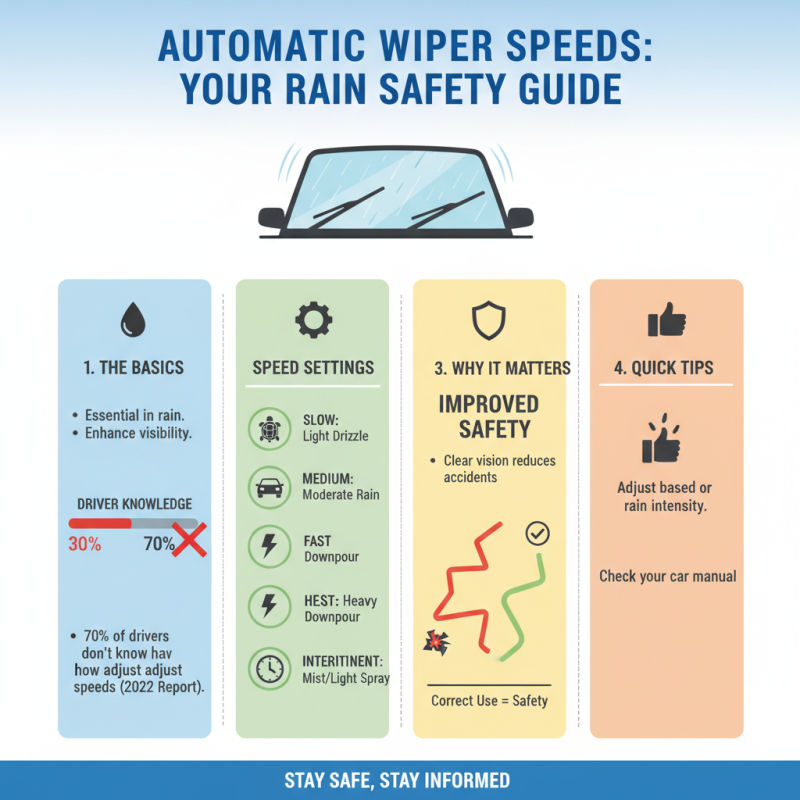
Automatic wipers offer essential features for drivers, especially in rainy conditions. The speed settings of these wipers are crucial for effective visibility. Typically, there are three to four speed options: slow, medium, fast, and intermittent. Adjusting these settings according to the rain intensity can greatly enhance safety. According to a 2022 automotive technology report, nearly 70% of drivers did not know how to properly adjust wiper speeds for different conditions.
When light rain falls, the low-speed setting often suffices. In heavier downpours, the fast setting is necessary. The intermittent feature can also be effective, providing pauses in between wipes. This setting helps to conserve wiper blades while maintaining visibility. Experts recommend using the intermittent setting during light showers. This balances safety and functionality.
Tips: Regular maintenance of wiper blades is essential. Consider replacing them at least every six months. Check the wiper function and speed settings before any long trip. Understanding these features can help prevent visibility issues. Moreover, drivers should reflect on their habits. Are you adjusting your wipers often enough? Neglecting these settings can lead to dangerous situations.
The Role of Auto Wipers in Enhancing Driver Visibility
Auto wipers are essential for enhancing driver visibility. According to a 2023 industry report, visibility issues contribute to 25% of vehicle accidents during rain. Inadequate wiper performance can lead to poor visibility, increasing the risk of collisions. Properly functioning auto wipers clear away rain, snow, and debris effectively, allowing drivers to maintain a clear line of sight.
Moreover, advancements in wiper technology offer improved performance. Most modern vehicles use rain sensors that automatically adjust the wiper speed based on rainfall intensity. A study found that these systems can reduce manual errors by up to 30%. Despite this, not every driver trusts the technology. Some prefer manual control. This reluctance can stem from concerns about reliability, especially during sudden weather changes.
Yet, auto wipers are not foolproof. Routine maintenance is crucial for optimal performance. Worn blades can leave streaks, which impair visibility. In fact, nearly 15% of drivers admit to neglecting wiper maintenance, according to recent surveys. This oversight can have severe consequences on road safety. Keeping wipers in check is a small task, yet it profoundly impacts driving safety in adverse weather conditions.