Top Metal Wiper Blade Features and Benefits You Need to Know?
In the automotive industry, the importance of effective visibility cannot be overstated. Metal Wiper Blades play a crucial role in ensuring that drivers maintain a clear line of sight during adverse weather conditions. Renowned expert in automotive safety, Dr. Karen Hines, once stated, "A reliable Metal Wiper Blade is essential for safe driving." This highlights the significance of choosing high-quality wiper blades.
Metal Wiper Blades offer several advantages over traditional rubber options. They are designed for durability and superior performance, making them a vital component of vehicle maintenance. The precision engineering behind metal blades ensures that they conform better to the windshield, providing a streak-free wipe. This is particularly important in heavy rain or snow, where visibility can quickly become compromised.
However, not all Metal Wiper Blades are created equal. Some may fail to deliver optimal performance, leading to frustration for drivers. Understanding the features and benefits of metal blades is therefore critical. These components should be assessed not just for cost-effectiveness but also for their ability to enhance safety on the road.

Key Characteristics of Metal Wiper Blades
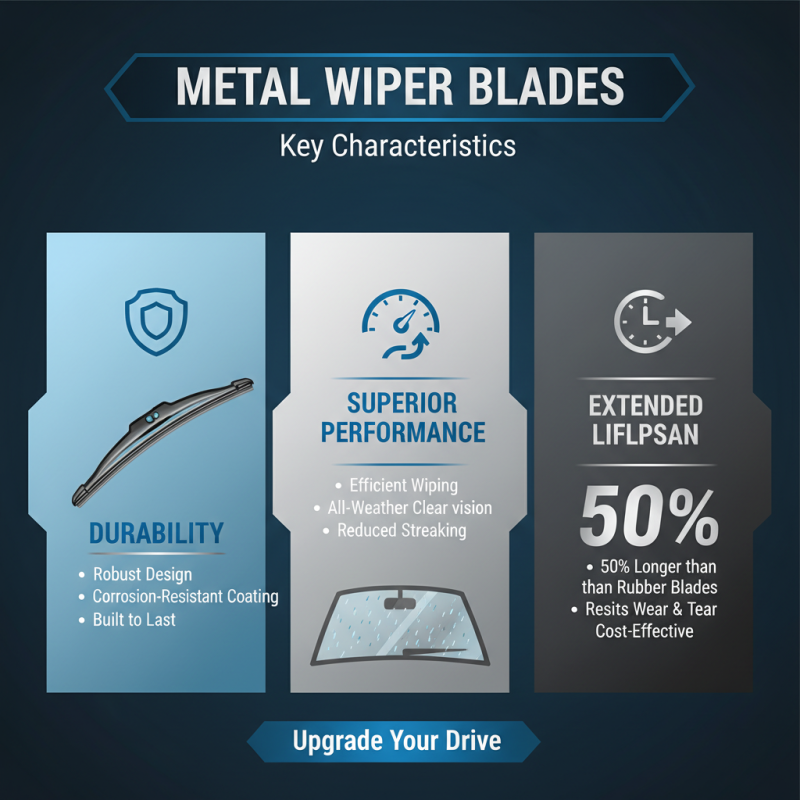
Metal wiper blades are gaining popularity due to their robust features. They are designed for durability and better performance. According to industry reports, metal wiper blades can last 50% longer than traditional rubber blades. This longevity is due to their corrosion-resistant coatings that prevent wear and tear.
The key characteristics of metal wiper blades include their structural integrity. They often have a stainless steel frame, which enhances strength and flexibility. This allows them to adapt to the curvature of the windshield, ensuring optimal contact with the glass. A study from the Automotive Wiper Blade Association highlights that proper contact can improve visibility by over 30% in rainy conditions.
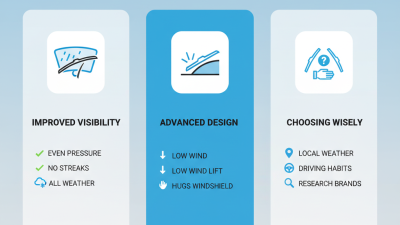
Moreover, metal blades are often engineered with advanced aerodynamics. This reduces lifting at high speeds, which can cause streaks. However, there are considerations. Some users report louder operation compared to rubber blades. Feedback also indicates that installation can be challenging in certain vehicle models. Balancing these attributes is vital for improving wiper blade performance.
Durability and Longevity of Metal Wiper Blades
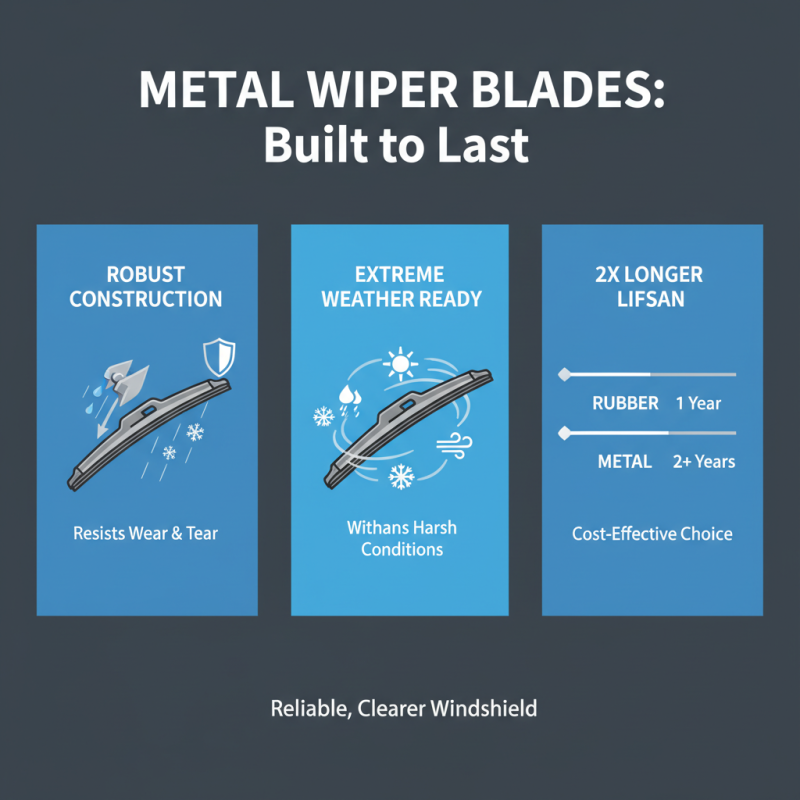
When it comes to vehicle maintenance, the durability and longevity of metal wiper blades are often overlooked. Unlike traditional rubber blades, metal wiper blades are engineered to withstand harsh weather conditions. Their robust construction helps them resist wear and tear, providing a reliable solution for clearing your windshield. A well-made metal wiper blade can last up to twice as long as its rubber counterpart, making it a cost-effective choice.
However, not all metal wiper blades are created equal. Some may lack the technology needed to perform effectively in extreme conditions. It's essential to consider the materials and design of a metal wiper blade. For instance, stainless steel components offer better resistance to rust and corrosion. This means they can endure rainy seasons and even snow without losing functionality.
Owning metal wiper blades demands awareness and maintenance. Although they are durable, they still require occasional checks to ensure optimal performance. Dirt and grime can accumulate, reducing their efficiency. Regular cleaning is necessary, even for the most robust products. A careful inspection can help identify when it’s time for a replacement, ensuring safety and visibility on the road.
Performance in Different Weather Conditions
Wiper blades, especially metal ones, play a crucial role in vehicle safety. Their performance can vary significantly based on weather conditions. Studies indicate that up to 90% of driving decisions rely on visibility. In heavy rain, metal wiper blades excel due to their rigidity and robustness. They maintain contact with the windshield, effectively clearing water and debris.
In winter conditions, metal blades can be less effective if not designed for cold weather. Ice can build up, causing chatter or skipping. This can lead to diminished visibility. According to industry reports, nearly 20% of drivers experience issues with wiper performance in icy conditions. Proper maintenance and selection of wiper blades are essential for optimal functionality.
Moreover, in snowy conditions, the weight of metal wiper blades aids in maintaining pressure on the glass. However, if they freeze to the windshield, it may cause damage when attempting to operate. Regular checking of the wiper blade’s flexibility and clearing ice can prevent these issues. Drivers need to stay informed about their wiper blades’ adaptation to weather changes for safer driving experiences.
Maintenance Tips for Optimal Wiper Blade Functionality
Maintaining your metal wiper blades is essential for safety and visibility, especially in adverse weather. Start by regularly inspecting the blades for any signs of wear. Look for cracks or tears in the rubber, which can affect performance. Remember, even slight damage can lead to streaks on your windshield and reduced visibility.
Cleaning your wiper blades is another vital step. Use a soft cloth and warm, soapy water. This helps remove dirt and debris that may stick to the blades. A clean blade will not only function better but will also last longer. Don't forget to check the windshield as well. A dirty windshield can wear out your wiper blades faster than you think.
In addition to cleaning, consider adjusting the angle of the wiper arms. If they are not making proper contact with the windshield, the effectiveness declines. It’s a common issue that many overlook. Regularly check for any loose screws or mounting issues that could lead to improper alignment. Taking these proactive steps can help ensure your wiper blades operate optimally, providing you with clear sightlines during any journey.
Top Metal Wiper Blade Features and Benefits
This chart illustrates the key features of top metal wiper blades and their respective performance ratings based on durability, performance, noise reduction, weather resistance, and ease of installation. These ratings can help you make informed decisions when maintaining or replacing your wiper blades for optimal functionality.
Comparing Metal Wiper Blades to Other Materials
When comparing metal wiper blades to other materials, several notable differences emerge. Metal blades provide superior durability. According to a recent industry report, metal wiper blades can last up to 30% longer than their plastic counterparts. This extended lifespan can lead to fewer replacements and reduced waste.
The weight of metal blades contributes to their effectiveness. Heavier blades maintain better contact with the windshield. As a result, users experience improved visibility during adverse weather. However, heavier construction can lead to increased strain on wiper motors over time.
It’s essential to consider that while metal blades excel in durability, they can be prone to rust and corrosion if not properly maintained. This is a point often overlooked. Many consumers do not realize that regular maintenance is necessary to maximize the lifespan of metal wiper blades. This critical detail can impact performance and safety on the road. Understanding these factors allows for more informed decisions, leading to optimal visibility and safety while driving.
Top Metal Wiper Blade Features and Benefits You Need to Know
| Feature |
Metal Wiper Blades |
Rubber Wiper Blades |
Silicone Wiper Blades |
| Durability |
Highly durable, offers longer lifespan |
Moderately durable, may degrade faster |
Durable under various conditions |
| Performance in Rain |
Excellent water removal |
Good water removal, may skip |
Very good water removal |
| Noise Level |
Generally quieter |
Can be noisier at high speeds |
Quieter performance |
| Temperature Resistance |
Very high temperature resistance |
Limited temperature resistance |
Excellent temperature resilience |
| Cost |
Usually higher upfront cost |
Lower upfront cost |
Moderate price point |