Leave Your Message
-
Phone
-
E-mail
-
Whatsapp
-
Whatsapp

-
Whatsapp

Choosing the 2026 Best Soft Wiper Blade for Global Buyers requires more than comparing prices or package claims. A reliable Soft Wiper Blade must clear water evenly, remain flexible in cold weather, and resist cracking under intense sunlight. It should also fit the vehicle precisely, without excessive pressure or noisy movement. Small details matter. A loose adapter can ruin an otherwise excellent blade.
Maya Chen, an independent automotive visibility consultant, puts it plainly: “A soft blade is valuable only when it keeps contact, pressure, and clarity in balance.” Her view reflects practical testing rather than attractive advertising. During evaluation, buyers should inspect wiping consistency, edge stability, installation quality, and performance after repeated use. A blade that looks smooth on day one may leave narrow water lines after several weeks. That weakness is easy to miss.
Global buyers also face different road conditions. Heavy rain, dust, snow, salt, and high temperatures can change results quickly. Materials that perform well in Northern Europe may behave differently in tropical markets. Packaging, adapter availability, warranty support, and vehicle compatibility deserve equal attention. These factors are not glamorous. They are often decisive.
No single Soft Wiper Blade wins every climate or vehicle design. Even careful testing has limits. Some manufacturer claims may remain difficult to verify across markets. This guide therefore compares practical evidence, not just specifications. It aims to help distributors, fleet managers, retailers, and everyday drivers make a clearer purchase decision in 2026. The best choice may not be the cheapest or most advanced-looking option. It should simply keep the windshield clear, quietly and consistently.
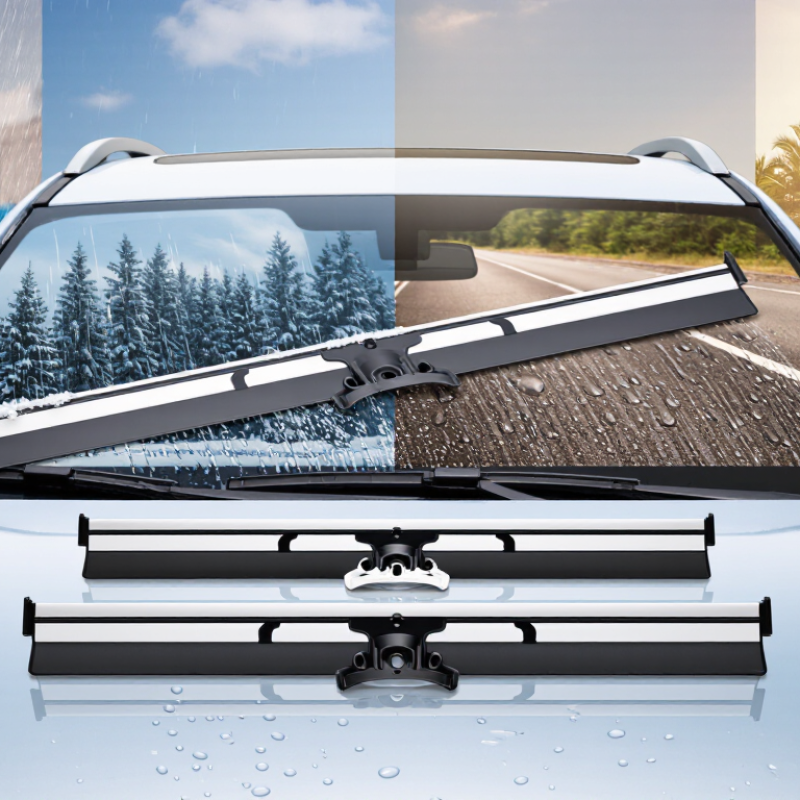
2026 Best Soft Wiper Blade for Global Buyers?
What Makes a Soft Wiper Blade Effective in 2026
A soft wiper blade should keep contact with curved glass during rain, dust, and sudden temperature changes. Its flexible rubber edge follows the windshield instead of skipping across it. This matters because the Federal Highway Administration reports that about 75% of weather-related crashes occur on wet pavement. Rain alone is linked to roughly 46% of these crashes. Clear wiping is not a cosmetic feature. It is a practical safety requirement.
Effective designs balance softness with recovery strength. A blade that feels extremely soft may lose its edge quickly under heat, ice, or road grit. Good products use a stable spine, even pressure distribution, and a finely shaped wiping lip. Independent testing should examine streaking, chatter, water removal, and wear after repeated cycles. SAE J903 provides a useful technical reference for windshield wiper performance, although laboratory results cannot represent every climate.
Market research from Mordor Intelligence projects steady growth in automotive wiper systems through 2030, with replacement demand remaining important. Buyers should therefore inspect material specifications, temperature ranges, and test conditions rather than trust vague claims. I would not call every soft blade superior. Some become noisy after a few weeks. Others wipe well but age poorly in strong sunlight. That is the part many product pages avoid. A reliable choice should show measurable performance, service-life evidence, and clear compatibility information for different vehicle shapes.
Practical specification guide for selecting soft rubber wiper blades. Values shown are typical industry ranges or commonly used service guidelines; exact requirements depend on vehicle design, climate, windshield condition, and local regulations.
| Evaluation Dimension | Recommended 2026 Specification | Typical Reference Range | Why It Matters | Buyer Assessment |
|---|---|---|---|---|
| Rubber Edge Flexibility | Soft, elastic wiping edge that maintains continuous contact with curved glass | Approximately 60–80 Shore A for common automotive wiping rubber formulations | A flexible edge follows windshield curvature and helps reduce untreated streaks, chatter, and skipping. | |
| Blade Length Accuracy | Exact match to the vehicle manufacturer’s specified driver-side, passenger-side, or rear length | Approximately 350–700 mm for many passenger vehicles; commercial vehicles may require longer sizes | An incorrect length can leave visibility gaps, contact the windshield frame, or overload the wiper mechanism. | |
| Wiping Edge Profile | Uniform, sharply formed wiping lip with no visible cuts, flattening, or molding flash | Common replacement blades use a narrow wiping edge designed to flip cleanly in both directions | A consistent profile supports even water removal and reduces lines caused by irregular rubber deformation. | |
| Frame Design | Frameless beam construction or a flexible hybrid structure with evenly distributed pressure | Beam blades use a continuous flexible spine; framed blades use multiple pressure points | Continuous pressure improves contact on curved windshields and reduces exposed joints that can collect ice or dirt. | |
| Pressure Distribution | Even contact from the center of the blade to both ends | Performance depends on blade curvature, flex spine design, arm force, and windshield shape | Uneven pressure is a common cause of missed areas, streaking, and premature edge wear. | |
| Temperature Capability | Rubber compound suitable for the destination climate, including heat, cold, and rapid temperature changes | Roughly −40°C to +80°C is a common target range for automotive exterior rubber applications, subject to formulation and testing | Cold flexibility helps prevent cracking and skipping, while heat resistance slows hardening and deformation. | |
| UV and Ozone Resistance | Rubber compound with protective additives and tested resistance to sunlight, ozone, and oxidation | Performance should be confirmed through supplier test reports or applicable laboratory methods | UV and ozone exposure can cause surface cracking, hardening, and loss of wiping quality even when the blade is rarely used. | |
| Ice and Snow Behavior | Low-profile flexible design with minimal exposed hinges and a rubber edge that remains pliable in winter | Beam-style blades generally have fewer external joints than conventional framed designs | Fewer exposed joints reduce snow and ice accumulation and help preserve contact with the glass. | |
| Aerodynamic Stability | Integrated spoiler or aerodynamic profile suited to the vehicle’s wiper arm and windshield | Most effective at higher road speeds when wind lift can reduce blade-to-glass contact | Stable contact helps prevent flutter, missed water paths, and wind-related noise during highway driving. | |
| Connector Compatibility | Correct adapter for the vehicle arm, securely locked with no excessive play | Common arm interfaces include hook-style, side-pin, bayonet, push-button, and top-lock designs | A compatible connector is necessary for safe attachment, correct blade angle, and reliable operation. | |
| Water Removal Quality | Clear wipe across the full swept area without continuous streaks, chatter, or skipped sections | Results vary with rubber quality, glass contamination, arm pressure, washer fluid, and blade condition | Water removal is the most direct measure of visibility and should be checked after installation. | |
| Noise and Chatter Control | Low-friction rubber coating or surface treatment with a correctly aligned wiping edge | Noise may increase when the windshield is dry, contaminated, waxed, or damaged | Quiet operation usually indicates stable contact and correct edge movement, although noise is not the only quality measure. | |
| Expected Service Interval | Inspection every six months and replacement when wiping quality deteriorates | Common replacement guidance: approximately 6–12 months, depending on climate, use, and storage | High heat, intense sunlight, dust, ice, and infrequent cleaning can shorten service life. | |
| Installation and Inspection | Clean windshield and blade edge before fitting; confirm locking and full movement after installation | Test with washer fluid rather than on dry glass | Correct installation and a clean glass surface prevent false quality judgments and avoid unnecessary edge wear. | |
| Global Buyer Documentation | Clear size chart, vehicle-fit information, material details, installation instructions, and quality-test records | Documentation requirements vary by market and purchasing channel | Accurate fitment and traceable specifications reduce returns and support consistent purchasing across different regions. |
Selection priority: Verify vehicle fit and connector type first, then compare rubber flexibility, temperature suitability, pressure distribution, UV resistance, aerodynamic stability, and documented service performance. Wiper blades should be used with suitable washer fluid and replaced when they leave persistent streaks, skip, chatter, or show cracking.